
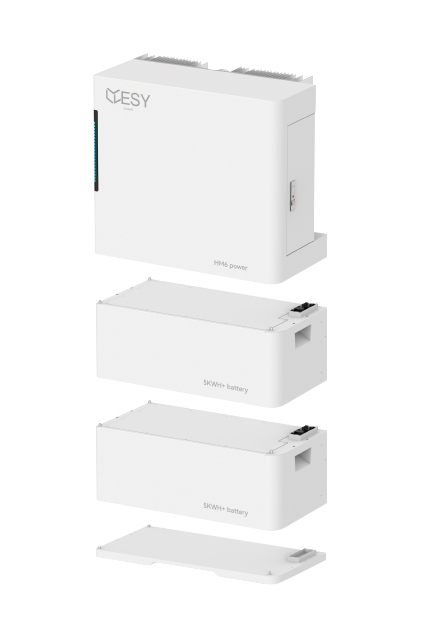
Energy storage products should be selected by matching three technical parameters: power rating, usable capacity, and electrical phase. A residential system usually ranges from 3–15 kW and 5–40 kWh, while C&I systems commonly reach 50 kW–MW levels with 100 kWh–MWh storage. EV charging applications often require 200 kW or higher power output with fast response capability. The correct configuration depends on load demand, operating hours, and grid structure rather than battery size alone.
Energy storage systems are designed around two basic measurements: power and capacity. Power is measured in kilowatts (kW) and defines how much electricity a system can provide at one moment. Capacity is measured in kilowatt-hours (kWh) and defines how long the system can supply energy.
A 10 kW / 20 kWh battery can provide 10 kW output for about 2 hours, while the same battery can supply 5 kW output for about 4 hours. This relationship is used across residential, commercial, and EV charging projects.
The ratio between power and capacity determines whether a storage system is suitable for short high-power events or long-duration energy supply.
According to data from the International Energy Agency (IEA), global battery storage deployment increased by more than 130% between 2022 and 2023, mainly supported by grid-scale, commercial, and renewable integration projects. The growth of installed systems has increased the need for accurate product matching.
Residential storage systems usually focus on solar self-consumption, backup electricity, and time-of-use electricity management. Most household batteries are installed together with rooftop solar systems, allowing excess solar energy generated during the day to be stored for evening use.
Typical residential specifications include:
| Application | Power Range | Capacity Range | Phase Type |
|---|---|---|---|
| Small home backup | 3–5 kW | 5–15 kWh | Single-phase |
| Large household | 5–15 kW | 15–40 kWh | Single or three-phase |
| Home EV charging | 7–15 kW | 20–60 kWh | Single or three-phase |
In Europe, many residential systems operate between 5 kW and 10 kW because household electrical connections commonly limit available power. In Australia, residential battery installations reached more than 180,000 systems by 2023, with many projects using 10–15 kWh batteries paired with rooftop photovoltaic systems.
Power selection for residential applications depends on peak household demand rather than average daily consumption. A house may use only 15 kWh per day but still require 8 kW output when several appliances operate at the same time.
Typical household loads include:
| Equipment | Approximate Power |
|---|---|
| Refrigerator | 100–500 W |
| Lighting | 100–1000 W |
| Air conditioner | 1–5 kW |
| Heat pump | 2–8 kW |
| EV charger | 3.5–11 kW |
A battery inverter with insufficient power may not support high-demand equipment even if the battery capacity is large. For example, a 30 kWh battery with a 3 kW inverter stores enough energy for long operation but cannot supply a 6 kW appliance load.
Capacity selection requires analysis of daily electricity consumption and required backup hours. A household using 20 kWh per day and requiring one full day of backup may need more than 22 kWh of usable storage when considering battery discharge limits.
Battery systems usually operate below 100% depth of discharge to improve service life. Many lithium iron phosphate (LFP) systems are designed around 80–95% usable capacity. A 20 kWh battery may provide approximately 17–19 kWh usable energy depending on manufacturer specifications.
Commercial and industrial storage systems have different requirements because their loads are larger and often include motors, production equipment, and large HVAC systems.
Typical C&I storage specifications:
| Project Type | Power Range | Capacity Range |
|---|---|---|
| Small commercial building | 30–100 kW | 100–500 kWh |
| Factory | 100 kW–5 MW | 500 kWh–20 MWh |
| Industrial park | 1–50 MW | Several MWh |
Commercial projects often focus on reducing electricity demand peaks. A building may have an average load of 400 kW but reach 900 kW during specific operating periods. A storage system can supply additional power during these periods and reduce dependence on high grid demand.
In commercial applications, inverter power rating is usually selected from the highest expected load period, while battery capacity is selected from the required operating duration.
A typical peak management project may use:
| Parameter | Example |
|---|---|
| Required output power | 500 kW |
| Operating duration | 2 hours |
| Required storage capacity | 1000 kWh |
The same capacity can serve different purposes depending on system settings. A 1 MWh battery may provide 500 kW for two hours or 250 kW for four hours.
Industrial energy storage systems also require consideration of battery cycle life. Applications with daily charging and discharging may complete more than 300 cycles annually. Over a 10-year period, a system can exceed 3000 operating cycles, making battery chemistry and thermal management important design factors.
Lithium iron phosphate batteries are widely used in stationary storage because they offer long cycle life and stable thermal performance. Many commercial LFP systems are rated for more than 6000 cycles at controlled operating conditions.
EV charging applications require different storage characteristics because charging demand changes quickly. A charging station with multiple DC fast chargers can create hundreds of kilowatts of short-term demand.
For example:
| Charging Station Data | Value |
|---|---|
| Installed charger capacity | 600 kW |
| Available grid power | 250 kW |
| Additional required storage power | 350 kW |
A storage system in this case does not necessarily need to provide all charging energy. It can supply temporary power when vehicle charging demand exceeds grid availability.
EV charging storage capacity depends on charging duration and vehicle traffic. A station requiring 300 kW additional power for two hours would require approximately 600 kWh of usable battery capacity.
The charging market has expanded rapidly. According to the International Energy Agency, global electric car sales exceeded 14 million units in 2023, increasing demand for charging infrastructure and energy management solutions.
Phase selection affects installation method, power capability, and grid compatibility.
Single-phase storage systems are commonly used in homes because most residential loads are distributed on one phase. These systems usually operate below 15 kW.
Three-phase systems are used for larger buildings and industrial facilities because they provide balanced power distribution.
| Phase Type | Typical Power | Application |
|---|---|---|
| Single-phase | 3–15 kW | Homes |
| Three-phase | 10 kW–MW level | Commercial and industrial |
Three-phase systems reduce current levels for the same power output. For example, a 30 kW load supplied through a three-phase connection distributes power across three conductors, making it more suitable for larger electrical installations.
Many commercial energy storage products are designed with modular battery cabinets and scalable power conversion systems. Modular designs allow customers to expand storage capacity when electricity demand increases.
Beyond power, capacity, and phase, several technical specifications influence system selection.
Battery C-rate describes how quickly a battery can charge or discharge. A 100 kWh battery operating at 1C can theoretically provide 100 kW output. A 2C battery can provide 200 kW output but may require stronger thermal management.
Round-trip efficiency is another important parameter. Modern lithium battery systems typically achieve approximately 85–95% efficiency. A system with 90% efficiency returning 100 kWh after charging requires about 111 kWh input energy.
Temperature conditions also affect performance. Many commercial systems operate within approximately -20°C to 50°C ranges, while battery containers may include heating and cooling systems for extreme climates.
Communication compatibility is required for integration with solar inverters, energy management systems, and charging controllers. Common communication methods include CAN, Modbus TCP, and RS485.
A practical selection process can be completed through several steps:
| Step | Evaluation Item |
|---|---|
| 1 | Identify application purpose |
| 2 | Calculate maximum power requirement |
| 3 | Calculate required energy duration |
| 4 | Select single-phase or three-phase architecture |
| 5 | Check battery, inverter, and grid compatibility |
Different applications require different design priorities. Residential users usually focus on backup duration and solar utilization. Commercial buildings often focus on demand control and operating cost reduction. EV charging sites require high power response and sufficient energy buffering.
Energy storage selection should therefore consider actual load conditions, operating patterns, and electrical infrastructure. A properly matched system can provide reliable electricity supply, improve renewable energy usage, and support changing energy requirements across different applications.